
Healthy Seminarians Healthy Church
  • About Us
    • History/Vision/Values
    • Staff & Board
    • Press & News
  • Seminarians
    • Overview
    • HSHC @ CTS
  • Congregations
    • Overview
  • Research and Advocacy
    • Overview
    • Health & Wholeness Assessment
  • Blog
  • Resources
    • Overview
  • Contact Us
  • Donate
    • Donate Now
09
Apr
April 2026 Recipes

By: Karen Webster

black bean burger dinner healthy potato burger recipe spinach and pea burger

Comments: 0

Journey Provisions: Expanding Your Culinary Ears

When one thinks of plant-based eating, the mind often jumps straight to the classic black bean burger.  While we love a good bean patty, it’s easy to get stuck in this “burger rut.”  This month, we want to expand your culinary ears to the different “notes” of plant-based cooking.

We hope you will check out these two (of the many) non-black bean recipes that have wonderful flavors and textures: a seasoned “Bombay Potato Burger” and a fresh “Spinach and Pea Burger.”  And, for those days when you crave the classic but are short on time, we’ve included a super firm “Black Bean Burger” that requires absolutely no chopping!

Tip From Our Kitchen

While these are excellent on a bun, we actually prefer preparing these medallion-style.  Shaping them into smaller patties helps them hold together better and makes them incredibly versatile.  Try tucking them into a pita (falafel-style) or tossing them on top of a spring salad for a hearty protein boost.

Make Now, Enjoy Later

All three of these recipes freeze beautifully.  We recommend making a double batch when you have the time, so you can enjoy a tasty quick meal even on your busiest of days.

  • Bombay Potato Burgers with Cilantro Chutney – A fragrant, potato-based delight.
  • Spinach and Pea Burgers – Bright, green, and full of spring flavor.
  • Easy “No-Chopping” Black Bean Burgers – The ultimate quick-and-firm pantry staple.

These recipes are all whole-food, plant-based and can be made without gluten, soy, coconut, oil and/or sugar.


 

09
Apr
April 2026 Trail Notes

By: Karen Webster

balance hearing listen making sense movement sensing shalom shalom stopping trail notes wholeness

Comments: 0

Anatomy of a Call: Hearing, Balance, and Movement


Stopping To Listen
I don’t know about you, but it is easy for me to think of hearing as a passive act.  However, deep listening often requires us to be intentionally still, which is definitely not easy for me!  Research shows that when we are physically still, our auditory processing is enhanced.  When our bodies are quiet, our brains can better isolate and interpret sound.

Spiritually, the same principle applies.  When we refuse to be still, we can easily get swept up in the “whirlwind” of modern life — the constant pings of notifications, the roar of our own busy schedules, and the inner distractions of our chattering minds.  However, when we are quiet, we are better able to catch the nuances of what God is whispering to us.  In other words, being still is not just about resting; it is about creating the necessary space to focus, trust, and receive God’s guidance.


Balance and the Inner Ear
Another fascinating fact is that our hearing and our equilibrium are interconnected: our sense of balance is literally located in the inner ear.  If we neglect our hearing — by failing to protect it or get it tested, for example— our physical stability suffers, making us more prone to stumbles.

This serves as a profound spiritual metaphor.  When our spiritual “hearing” is muffled by neglect or distraction, our sense of balance in life can get “off,” and we may “misstep” or miss where God is leading us.  As Isaiah 30:21 reminds us, we are promised a voice that directs our path, but we must have the ears to hear it to keep from falling.


Movement Toward Wholeness
While stillness helps us hear, movement helps us sustain that hearing; physical activity improves blood flow to the ears, directly impacting both our auditory health and our balance.

Likewise, God calls us to move into greater wholeness.  To live into this more fully, we must move to serve God, neighbor, and self, living out our discipleship as faithful followers of Christ.  However, in order to move forward in the direction God is calling, we have to hear before we can step into it. 

By using tools like the Ignatian Discernment process found in this month’s Waystation, we can more easily ensure that our movements are not just busy-work, but faithful responses to God’s “still, small voice.”


Reflection Questions for Your Consideration:

  • If ‘Shalom’ had a sound in your life right now —a specific voice, a melody, or even a moment of silence—what would it sound like?
  • What are one or two small steps you can take this week to amplify that sound?


Onward together,

Karen Webster

HSHC Co-founder/Executive Director


*Image credit: Canva


Glasses Refocusing The Forest
16
Jan
January 2026 Trail Notes

By: Karen Webster

lens making sense refocus sensing shalom shalom trail notes

Comments: 0

Sensing Shalom Through Refocusing Our Lens

In our current rhythm of life these days, many of us find ourselves moving quickly from one responsibility to the next.  Over time, this pace can quietly draw us away from our own bodies.  We begin to treat them as mere vehicles — getting us to work, school, meetings, and other commitments and responsibilities — rather than honoring them as an essential part of the fullness of life God desires for us.

In this state, our vision can become purely utilitarian if we aren’t careful!  For example, it is tempting to look at our calendars to measure our worth, look at our screens to find our information, and look at our neighbors only to see what they require of us.

It is important for us to be mindful of the fact that what we fix our eyes on eventually determines the shape of our souls.  If we only look at what is broken, what is urgent, or what is digital, our internal world becomes fragmented, weary, and impoverished.

Thus, to “Sense Shalom” through sight requires us to refocus our lens, a shift from scrutinizing our lives and the world to beholding them.  For example, we can pause and look at the creation around us by noticing the subtle yet incredibly intricate shape of a flower blossom.
In this moment, we have the opportunity to see it as a sacred gift rather than as a resource. Rather than being filled with anxiety, this simple act can fill us with a sense of greater joy and peace.

It is also important for us to remember that our eyes need physical Sabbath just as much as the rest of our bodies. In an era of “blue light” and endless scrolling, our mental health is tied to our visual focus. When we intentionally lift our gaze from our screens to the horizon, or from our self-critique to the Imago Dei in a stranger’s face, we allow the light of Christ to fill our whole body.

In other words, when we intentionally change what we look at and how we look at it, we begin to clear the fog that can lead to burnout and other health issues.  Plus, we are able to see more clearly the deep interconnectedness of our physical energy, our emotional resilience, our spiritual depth, and the wellbeing of our communities and the creation that sustains us, reminding us that wholeness is never solitary, but shared with neighbor and Creation alike.

As we continue to make our way in this new year, perhaps consider one (or more) of the following:

  • When you look in the mirror, do you see a “resource” that must perform, or a “sacred gift” to be cared for?  How might you view your physical body with more kindness, starting today?
  • Think of a “difficult” person.  If you looked at them with the “eyes of your heart” instead of your “functional eyes,” what beauty or brokenness might God be calling you to notice?
  • Step outside for five minutes. Look for one thing in God’s creation that provides you with no “use” or “value” other than its own sheer existence.  How does acknowledging its sacredness change your stress level?

As you move about in the months to come, we pray that the eyes of your heart would be enlightened.  May you see the path ahead not just as a struggle to be endured, but, even more,  as a sacred route filled with the light of God’s presence.

Onward together,

Karen and Travis Webster

HSHC Co-founders

*Image was generated in Canva using AI.


Potato Burger, Spinach and Pea Burger, and Black Bean Burger
15
Jan
January 2026 Recipes

By: Karen Webster

condiments nacho sauce recipe spinach dip sunflower seed "sour cream"

Comments: 0

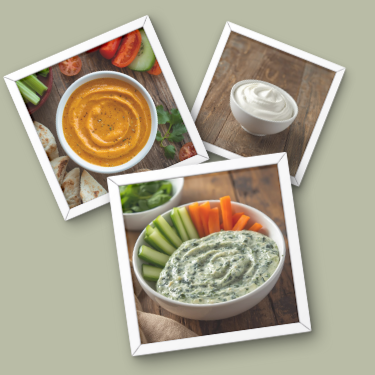
Our whole food, plant-based recipes contain no refined oils or sugars and they are also suitable for those with gluten and nut sensitivities. We hope these recipes help you care for your body while enjoying the flavors you love.

Nacho/Queso Sauce

Servings: 4 cups

Ingredients:

  • 2 cups Russet potatoes (coarsely chopped)
  • 1 cup carrots (coarsely chopped)
  • 1/2- 3/4 cup water
  • 1 TBSP lemon juice
  • 1/2 cup nutritional yeast
  • 1 tsp salt
  • 1/2 – 1 tsp garlic powder
  • 1/2 – 1 tsp onion powder
  • Optional: pinch of turmeric (for color), dash of cayenne and/or smoked paprika (we like spicy food, so we add 1 tsp smoked paprika and 1/2 tsp cayenne)

Directions:

  1. Boil potatoes and carrots until tender (about 20 minutes).
    • OR you can microwave the potatoes and carrots in a glass bowl with a lid in 2 cups of water (for about 10-12 minutes).
  2. When done, drain and reserve the liquid.
  3. Put all of the ingredients in a Vitamixer/food processor/blender and blend until smooth.

Notes:

  • If the cheese is too thick, add a little more of the reserved liquid.
  • This sauce is great with baked chips (using whole wheat pitas and/or corn tortillas), seed crackers, raw vegetables, part of a seven layer dip (this is one recipe we like), on a taco salad, etc.

Spinach Dip

Serving: makes 5 – 5 1/2 cups

Ingredients:

  • 1/2 cup carrot (finely shredded)
  • 1/2 cup yellow or white onion (finely diced)
  • 1 10-oz box chopped spinach (thawed)
  • 2-3 garlic cloves (minced)
  • 2 green onions (finely chopped)
  • 1 8-oz can water chestnuts (chopped)
  • 1 cup plant-based mayo*
  • 1 cup plant-based sour cream**
  • 1/4 cup nutritional yeast
  • 1 tsp Marmite (if gluten sensitivity is not a concern) OR 1 tsp gluten-free miso
  • 1 tsp soy sauce or gluten free soy sauce (use 2 tsp if you do not have Marmite or miso on hand)
  • 1/2 tsp garlic powder
  • 1/4 tsp salt
  • Optional: dash of lemon juice

Directions:

  1. Put the carrot and onion in a glass bowl (one that has a lid) and add 2 TBSP water. Place the lid on the bowl (with room for steam to escape).
    • Microwave for 2 minutes.***
  2. Drain the water and let it cool for five minutes.
  3. While the carrots and onions cool, squeeze the water out of the spinach (place the spinach in a colander and press on it with the back of a spoon).
  4. In a large bowl, stir together the carrots, onions, and drained spinach. Add the green onions, water chestnuts, and garlic. Stir until combined.
  5. Add the plant-based sour cream, plant-based mayonnaise, nutritional yeast, Marmite or gluten-free miso, gluten-free soy sauce, garlic powder, salt, and lemon juice. Stir.
  6. Let it chill for at least 4 hours (overnight is even better) before serving. Of course, if that is not possible, it can be served immediately.
  7. Enjoy with vegetables, seeded crackers, spread on a sandwich, mix into a casserole, etc.

Notes:

* In lieu of commercially made vegan mayo (usually made with a lot of oil), we use this white bean mayo recipe OR this tofu-based mayo recipe. Both are oil-free.
** In lieu of commercially made vegan sour cream (usually made with a lot of oil), we use the sunflower seed-based recipe provided below (nut free), cashew-based recipe, OR this tofu-based recipe. All of these are oil-free.
***Instead of using a microwave, one can sauté the carrots and onion in 2 TBSP of water on the stovetop for 2 minutes.


Sunflower Seed “Sour Cream”

Servings: 1 1/2 cups

Ingredients:

  • 1 cup sunflower seeds (soaked in water overnight in the refrigerator)
  • 1 TBSP lemon juice
  • 1 TBSP apple cider vinegar
  • 1/2 cup water (reserve 1/4 cup)
  • Optional: pinch of salt

Directions:

  1. Using an immersion blender/blender/Vitamixer, blend everything together.
  2. You may want to add some water (1 TBSP at a time) until you get your desired texture (smooth and creamy).

Adapted from: https://naturalgoodness.blog/vegan-sour-cream-sunflower-seed-based-no-cashews/?amp=1


14
Nov
November 2025 Recipes

By: Karen Webster

Comments: 0

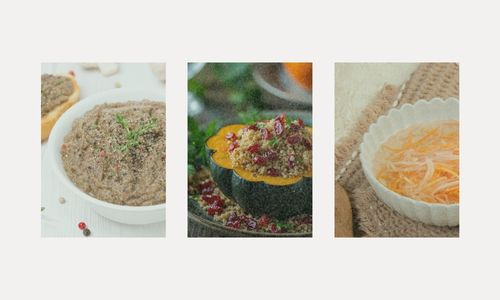
Mushroom/Nut or Seed/Dried Tomato Pâté

Servings:  8-12

Ingredients:

    • 1 cup pecans or walnuts (or use sunflower seeds to make it nut-free)
    • ½ cup dried porcini mushrooms (or shitake mushroom works, too)
    • 1 cup boiling water
    • ½ lbs. Portobello mushrooms (or crimini/brown mushrooms works, too)
    • 2 TBSP tamari (or soy sauce if it doesn’t need to be gluten-free)
    • 2 TBSP tahini (or vegetable broth)
    • ½ TBSP nutritional yeast
    • 2-3 tsp lemon juice
    • 1 tsp chopped rosemary
    • 1 tsp white miso (double-check the ingredients if you need it to be gluten-free)
    • ¼ cup dried/dehydrated tomatoes
    • Optional: pinch of black pepper (or freshly ground peppercorns)

Directions:

1. Soak nuts (or sunflower seeds) in room temperature water for about an hour.

2. Put the dried mushrooms in a small bowl and cover them with a cup of boiling water.  Let the mushrooms soften for about 15 minutes.  Rub the mushrooms to remove the grit (small rocks/dirt), and transfer to a small bowl.  Make sure you reserve the liquid!

3. Slice the Portobello/crimini/brown mushrooms into ¼ inch slices.

4. In a bowl, whisk together the tamari, tahini (or vegetable broth), nutritional yeast, lemon juice, rosemary, miso, and optional black pepper.

5. Add the sliced mushrooms and mix gently to coat the mushrooms.  Let the mixture stand for 15 minutes (mix occasionally).

6. In a small saucepan, combine the soaked porcini and dried tomatoes.

7. Slowly pour in the porcini soaking liquid (through a fine sieve or cheese cloth so as to keep out any grit that may have come about via the soaking process).

8. Bring the liquid to a boil, and cover and simmer over low heat until the tomatoes are tender (about 4 minutes).

9. Drain the nuts (or sunflowers) and transfer to a food processor.

10. Using a slotted spoon, transfer the marinated portobellos, porcini, and tomatoes to the food processor and pulse until it becomes a coarse paste.  Add more porcini liquid if needed.

11. Put the pate into a small serving bowl and store in the refrigerator until you are ready to use it.  Enjoy!

Note: you can make it several days in advance.

Adapted from: http://www.hollithompson.com/porcini-and-pecan-pate/#ixzz4E9ZERsUt


Stuffed Acorn Squash

Servings: 4

Ingredients:

    • 2 acorn squash (halved and seeds scooped out)

For the stuffing:

    • 1 yellow onion (chopped)
    • 2 garlic cloves (minced)
    • 1 cup quinoa (pre-rinsed or rinse with cold water before using)
    • 2 cups + 2-3 TBSP vegetable broth
    • ½ cup chopped nuts or seeds (walnuts, pecans, almonds, pistachios, pumpkin seeds, or sunflower seeds)
    • ½ cup dried cranberries (apple juice sweetened as opposed to sugar sweetened)
    • 1 ½ tsp fresh thyme leaves (finely chopped) or ½ tsp dried thyme leaves
    • ¾ tsp fresh sage (finely chopped) or ¼ tsp dried sage
    • ¼ tsp black pepper
    • ⅛ tsp ground cinnamon

Directions:

To cook the acorn squash:

    1. Preheat your oven to 400F (200C).
    2. Halve the squash and use a spoon to scoop out the seeds and stringy bits.
    3. Bake cut side facing down on a baking pan lined with parchment paper for 25 – 35 minutes until the squash is fork-tender.

To make the quinoa filling:

    1. Heat the 2-3 TBSP vegetable broth in a large high-sided pan or pot over medium-high heat.
        • When the broth is hot, add the onions and garlic and sauté until the onions turn translucent and just begin to brown, about 5 minutes.
    2. Add the quinoa and 2 cups of vegetable broth and cover with a lid.
        • Bring to a simmer and continue to simmer for 10 – 15 minutes until the vegetable broth is absorbed and the quinoa is cooked.
    3. Once the quinoa is cooked, stir in all of the remaining ingredients, the nuts or seeds, cranberries, thyme, sage, pepper, and cinnamon.
    4. Remove from heat.

To stuff the acorn squash:

    1. Divide the quinoa mixture evenly among the acorn squash halves, packing it into the well of the squash. You may have extra quinoa leftover.
    2. Serve hot and garnish with more fresh thyme or sage as desired.

Note for making this in advance:  you can prepare the entire dish ahead of time.  Allow the squash and quinoa to cool completely before covering and storing in the fridge for up to 2 days.  To reheat, cover in foil in an oven preheated to 400F (200C) until heated through.  If you like you can remove the foil for the last 5 – 10 minutes to crisp up the top slightly.

Adapted from: https://itdoesnttastelikechicken.com/vegan-stuffed-acorn-squash/#recipe


Quick Pickled Carrot and Daikon (White) Radish

Makes: 4 cups

Main ingredients:

    • 12-inch large daikon/white radish (julienned/cut into 3-4 thin matchsticks)
    • 2 large carrots (julienned/cut into 3-4 thin matchsticks)

Brine ingredients:

    • 1 cup water
    • 1/2 cup rice wine vinegar
    • 1-2 TBSP maple syrup
    • 2 tsp salt

Directions:

    1. Combine the pickle brine in a saucepan and boil on medium heat until the sugar dissolves (3 to 4 minutes). Stir occasionally. Remove from the heat and cool it down.
    2. Place the julienned carrots and radishes into a 4-quart mason jar and pour over the brine.
    3. Close the lid. Gently move the jar around a little bit to make sure the brine is fully covering the carrots and radishes.
    4. Leave the jar at room temperature for 3 to 4 hours, then move to the refrigerator.
    5. Chill the pickles for 30 mins to 1 hour before serving for optimal taste.

Adapted from: https://mykoreankitchen.com/pickled-carrots-and-daikon-radish/#recipe


14
Nov
November 2025 Trail Notes

By: Karen Webster

fall garden

Comments: 0

Little Plant, Big Lessons

“What’s the point?  It isn’t going to amount to anything.  So I’m not going to get my hopes up.  But at the same time, I feel called to tend to it, because who knows what will happen?

That was the conversation I had with myself earlier this year (late May in western Pennsylvania) as I stood over a tiny squash seedling that had appeared, perhaps planted by a bird or wind, in my and Travis’ back garden.  Given my previous challenges with squash bugs, I had intentionally not planted any type of squash plants (squash, zucchini, pumpkins, melons, etc.) for several years, despite everyone’s claim that “they’re so easy to grow!”  Yet here I was, debating whether this little plant was worth the trouble.

A few weeks later, in early June, I said to it (and, let’s be honest, to myself):

“Ok, little plant, here’s the thing… I’m going to continue to give you water, but it probably won’t make any difference.  You will die.”

By mid-June, the conversation changed slightly:

 “Ok, little plant that is getting bigger.  In addition to water, I’m going to go ahead and give you some fertilizer, because you’ve made it this long, but pretty soon the squash bugs are going to lay eggs on you and you will die.”

Then came mid-August.

“Ok, little plant that is now huge and has four recognizable fruits on it.  I’m now going to carefully untangle you from my strawberry plants, since I don’t want you to smother them while the slugs and our other garden critters eat away at what you have worked so hard to produce.”

And then… late September arrived.  To my disbelief, I harvested four awe-inspiring acorn squash!  PLUS…

  • Two large Daikon/white radishes (over two feet each)!
  • Several Delicata squash, despite being “pruned” several times by deer (this squash plant was growing outside our deer fence) and somehow not destroyed by the squash bugs either.
  • Tomatoes from one of the healthiest looking tomato bushes I have ever seen.
  • And, we got to enjoy the beauty of several huge Zinnia plants until the hard freeze came in just last week.


None of it, not one thing, was planted by me!


How easy it is to doubt what God has in store for us.  Maybe, like me, you’ve thought, “What’s the point?  It won’t amount to anything.”  And yet, when we cultivate a receptive space (one that is open to God’s quiet nourishment, whether in silence, through creation, with others, etc.), it is remarkable what can take root and flourish.  God’s work in and through us often bears fruit far beyond anything we could have imagined, planned, or produced ourselves.  


As we move into the holiday season, a time when our hopes and expectations are often challenged, I encourage us all to tend diligently to our metaphorical garden plots — our wellbeing, our spiritual soil — entrusted to us by God.  Keep nurturing.  Keep watching.  Be on the lookout for the fruit that God is preparing for you.  It may come in surprising ways.


May all be well,


Karen H. Webster


HSHC Co-founder/Executive Director


*Image was AI generated in Canva


09
Sep
September 2025 Recipes

By: Karen Webster

Comments: 0

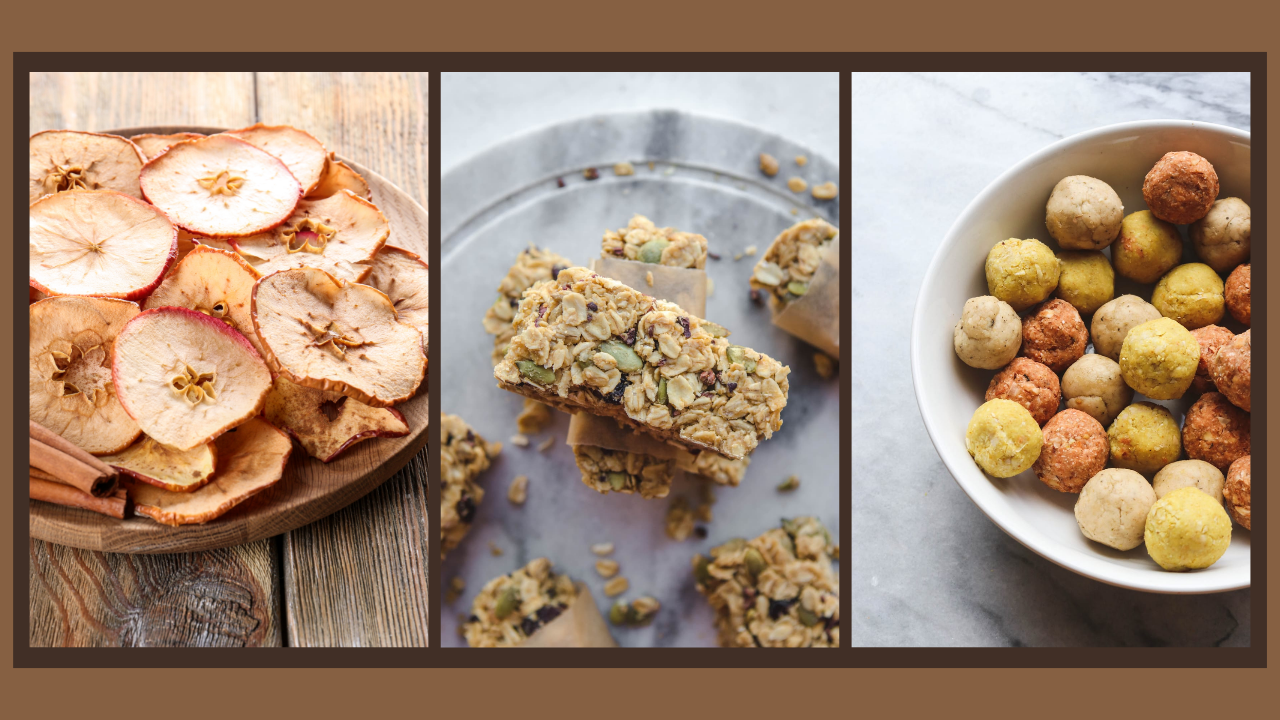
Apple Chips

Servings: varies based on how many apples are used

These are an easy (only 2 ingredients), on-the-go fruit snack.  Plus, no need to peel or core the apples!

    • Oven option – click here.
        • Note: you don’t have to use a mandolin, which the recipe recommends.  A sharp knife will work fine, too.
    • Dehydrator option – click here.

No-Bake Granola Bars

Servings: 10 Bars

Ingredients:

    • 1/2 cup date OR maple syrup OR 1/4 cup of each*
    • 1/2 cup nut butter (almond, peanut, etc.) OR seed butter (sunflower, tahini, etc.) 
    • 1/4 cup oat flour (gluten-free for those with gluten sensitivity)**
    • 2 1/2 cup rolled oats (not instant, gluten-free for those with gluten sensitivity)
    • 2/3 cup chopped nuts (almonds, pecans, walnuts, etc.) OR seeds (sunflower, pumpkin, hemp, sesame, etc.)
    • 1/2 cup dried fruit (apples, figs, raisins, etc.)
    • Pinch of salt
    • Optional: 2 TBSP Cacao Nibs

Directions:

    1. Add the syrup and nut/seed butter (of choice) to a medium bowl. Mix until well combined.
    2. Add in the oat flour with a pinch of salt, and mix again until well-incorporated.
    3. Add the remaining ingredients to the bowl and stir well.
    4. Line a 9×9″ baking pan with parchment paper, and firmly press the mixture into the pan.
    5. Let sit for at least 15-20 minutes (overnight is fine, too) to allow the oats to absorb any extra moisture.
    6. Cut the bars in the pan, then carefully remove the bars via pulling on the parchment paper.***
    7. Store at room temperature for up to 6 days (or immediately stick in the refrigerator or freezer to maintain freshness longer).

Notes:

*Agave OR coconut nectar can be used instead of date OR maple syrup.

** To make your own oat flour, simply blend 1/4 cup of oats in a blender/coffee grinder (designated for grinding grains/nuts, etc.) for 30-60 seconds (it should be a very fine texture once finished).

*** Since these bars are homemade, they can still be quite fragile.  To ensure they don’t crumble, cut them in the pan before you remove them, and pack them with a little extra cushion when taking them on-the-go.

Adapted from: https://frommybowl.com/no-bake-granola-bars-nut-free/

Pizza Bites

Servings: 10-12 Bites

Ingredients:

    • 1/2 cup sunflower seeds (raw)
    • 1/2 cup white beans (cannellini, navy, great northern beans) 
    • 2 TBSP oats (gluten-free, ground into flour)*
    • 1 TBSP tomato paste
    • 1 TBSP nutritional yeast**
    • 2 tsp Italian seasoning
    • 1 tsp garlic powder
    • 1 tsp onion powder 
    • Optional: pinch of salt and/or cayenne

Directions:

    1. Combine all ingredients in a food processor or blender and pulse until well-incorporated.
    2. Wet your fingers slightly (this prevents the dough from sticking) and roll the dough into 10-12 bite-sized balls (about the size of a doughnut hole).
    3. Store them in an airtight container in the fridge for up to one week, or in the freezer for up to two months.

Notes:

* The oat flour may be substituted with any flour of choice (if gluten sensitivity is not a concern).

** Travis and I like more intense flavors, so we at least double the amount of seasonings (nutritional yeast, Italian seasoning, garlic powder, and onion powder) that is called for in this recipe.

Adapted from: https://frommybowl.com/savory-energy-ball-recipes


09
Sep
September 2025 Trailnotes

By: Karen Webster

community joy trailnotes

Comments: 0

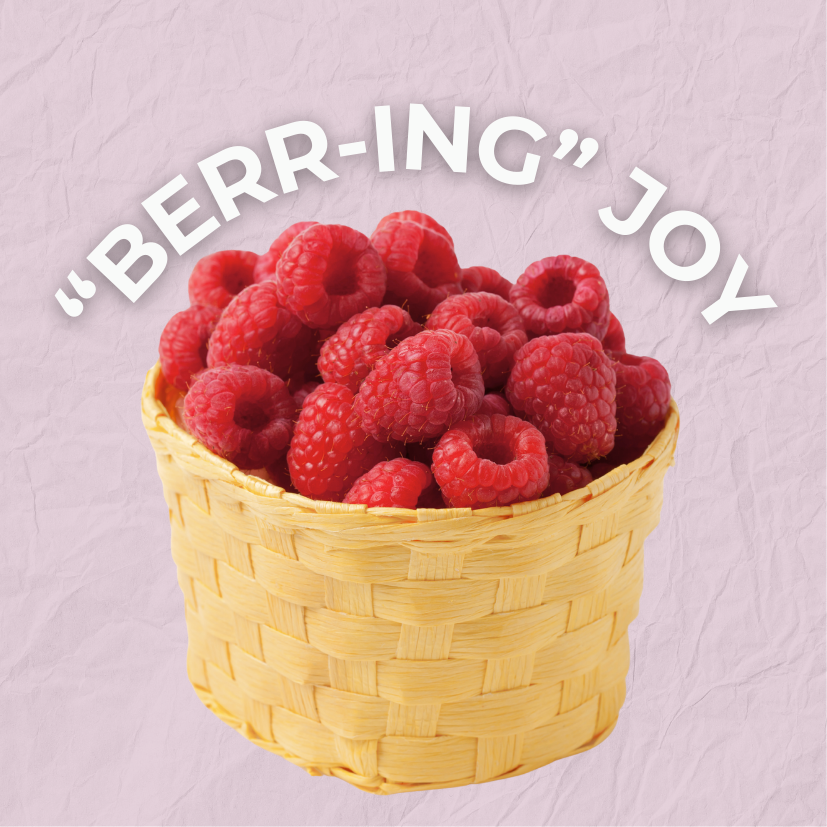
“Berr-ing” Joy

“I have said these things to you so that my joy may be in you and that your joy may be complete.” – John 15:11 (NRSVUE)

“Dad, why does she give us raspberries?” asked a 4 year old in our neighborhood.  

“She knows we like raspberries and she has extras,” his father replied. 

 “Plus, it brings me joy to be able to share them with you.” I said as I handed them the container of freshly-picked raspberries from our garden.  They both smiled and continued on their walk, while I returned to tending to Travis’ and my front yard pollinator garden.

Moments later, another neighbor, who regularly walks by our house with her dog, came towards me.  I put down my gloves and asked, “Would you like some of our raspberries?”  

Her face immediately lit up as she said, “Yes, please!  You know how much we love your raspberries.”  I went inside our house and got a container of the raspberries. 

“How have you been?  I have not seen you for a bit,” I asked her as I brought them out to her.  Over the next several minutes, she shared how she had just spent the previous night in the emergency room due to a chronic illness she has. However, she was feeling better today and looked forward to eating the raspberries.  After we finished speaking, she returned to her walk and I to our garden.

Several moments later (and I’m not making this up!), a woman whom I didn’t recognize started walking up the street towards me.  I put down my gloves and asked, “Would you like some of our raspberries?”  

Her face, too, immediately lit up as she said, “Yes, please!  I love raspberries, and I miss being able to enjoy the ones that used to grow in my grandparents’ garden.”   I went inside our house and got a container of the raspberries. 

As I brought them to her, I asked, “I don’t recall seeing you in our neighborhood before.  Are you new to this area?”  Over the next several minutes, she shared how she had just lost her job for a fairly large firm in downtown Pittsburgh, which is why she now had time to explore new areas to walk (she lived in a nearby neighborhood) and how she was going to be alright because she was able to live with her parents.  However, she was really concerned about some of her coworkers, who were now in a real financial bind.  After we continued to speak for a few more minutes, she returned to her walk and I to our garden, feeling completely overwhelmed with joy.  I had only expected to pull some weeds, but instead God shared this gift with me. 

What made this experience even more joyful was the fact that the initial raspberry plants that helped to establish our raspberry bed now were acquired from a church (where Travis worked while pursuing his doctoral degree) who shared property with a school who put in a garden.  As is the nature of raspberries, the plants tend to wander from the beds in which they are planted… other garden beds, lawns, you name it, they will try to grow there!

One summer, after multiple weeks of seeing some young raspberry plants get mowed over by the landscaping company who tended to the lawns of the two properties, Travis asked if we could transplant some of the young plants to our yard.  They said, “Help yourself.”

Fast forward ten years – we have harvested gallons of amazing raspberries and have been able to give away both numerous containers of raspberry and dozens of raspberry plants to family members and neighbors who have shared (both the fruit and the plants) with others.  All of this was made possible because others shared their resources with us.

Throughout this year, we’ve been exploring common (but often overlooked) aspects of our discipleship — for example, how we use our time and extend our hospitality.In this edition, we are focused on the blessings that come from sharing our resources.  As the summer starts to fade and as we enter a new season teeming with possibilities (a new school year, a new church year, a new chapter in our lives) I want to encourage us all to consider — what resource(s), big or small, may God be calling us to share with others?  

May all be well,

Karen H. Webster

HSHC Co-founder/Executive Director

19
Jun
June 2025 Recipes

By: Karen Webster

healthy sauces summer vegan

Comments: 0

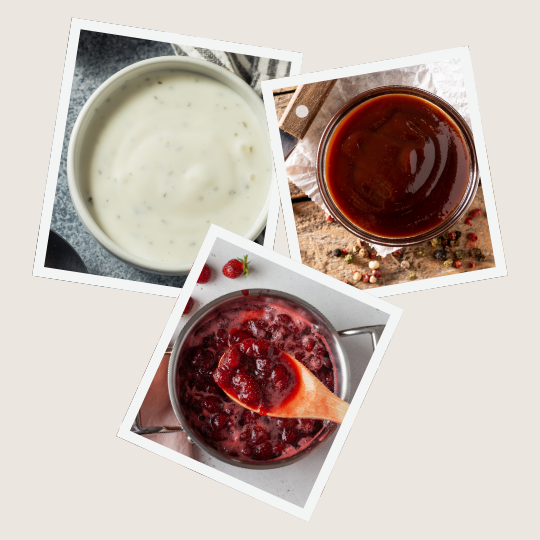
All recipes are whole foods, plant-based.  In addition, they contain NO gluten, nuts, coconut, refined sugars or oil.

Plant-Based Ranch Dressing*

Servings: 1.25 cups

Ingredients

      • 16 oz. tofu

      • 1/4 cup water

      • 2.5 TBSP sunflower seeds (soak in warm water for 30-60 minutes)

      • 2.5 TBSP apple cider vinegar (OR sherry vinegar, rice vinegar, distilled vinegar)

      • 1.5 TBSP nutritional yeast

      • 2 tsp miso (some brands of miso MAY contain gluten, so please check the list of ingredients if this is a concern)

      • 1 TBSP dried minced onions (OR 2 TBSP finely chopped fresh sweet onion)

      • 1 TBSP dried garlic granules (or 3 cloves of minced fresh garlic)

      • 1.5 tsp pepper

      • 1 tsp salt

      • 1 tsp dried dill AND 1 tsp dried parsley (OR 1/3-1/2 cup fresh chopped herbs – dill, parsley, basil, and/or cilantro)

    • Optional: 2 green onions (chopped)

Directions:

  1. Soak sunflower seeds in warm water for 30-60 minutes.
  2. Drain sunflower seeds.
  3. Place all the ingredients in a blender (or use a 32 oz. mason jar and immersion blender).
  4. Blend until creamy and smooth!  Scrape down the sides as necessary.
  5. Chill in the refrigerator.  The dressing will thicken as it chills.

    Note: This recipe is a quick and easy version.  However, using the fresh herbs, onion, and garlic listed instead of the dry ingredients definitely takes this dressing to the next level!

    * Adapted from – https://www.feastingathome.com/vegan-ranch-dressing/#tasty-recipes-22357-jump-target

    Easy/Homemade BBQ sauce*

    Serving: 1 1/3 cup

    Ingredients

        • 6 oz. tomato paste

        • 1/4 cup maple syrup (OR sub 2 Medjool dates — see notes)

        • 1/3 cup apple cider vinegar (OR sherry vinegar, rice vinegar, distilled vinegar)

        • 1/2 cup water

        • 2 tsp dried smoked paprika

        • 1 tsp dried onion powder

        • 1 tsp dried garlic powder

        • 1/2 tsp dried ancho chili powder

        • 1/2 tsp cumin

        • Sea salt to taste

        • Optional: pinch or two of cayenne (to add some heat)

      • Optional: 1/4 tsp liquid smoke (increase the depth of flavor)

    Directions:

    1. Combine all ingredients in a medium bowl and whisk together (or shake in a mason jar).
    2. Enjoy!

      Notes: If using dates rather than maple syrup, process the ingredients in a food processor, blender, or use an  immersion blender.

      * Adapted from – https://healthymidwesterngirl.com/vegan-barbecue-sauce/

      30-Minute Sugarless Summer Jam*

      Servings: 6 cups

      Using a no-sugar pectin, this jam can be made in less than 30 minutes.  Plus, it has no added sugar and can be stored in the refrigerator or freezer.

      Ingredients

          • 3 lbs. summer fruit (strawberries, blueberries, raspberries, blackberries, peaches, etc.)

          • 1 cup apple juice concentrate (thawed)

          • 5 TBSP Low or No-Sugar Needed Pectin

        • Optional (for those who are used to regularly sweetened jam): 1/4 cup (or to taste) maple syrup or date paste.  Don’t use date sugar (it doesn’t dissolve in liquids!).

      Directions

      1.    Wash the fruit and dry it in a colander.
      2.    If using strawberries, hull them.  If using peaches, cut into quarters and remove the pits.  For other berries, skip to the next step.
      3.    Put the fruit into a food processor and pulse until the fruit is coarsely mashed.  You can also mash the fruit using a potato masher.
      4.    In a large pot, stir together the apple juice concentrate, summer fruit, and pectin.
      5.    Bring the mixture to a boil over high heat.
      6.    Add optional sweetener if desired.
      7.    Boil hard for 1 minute, stirring constantly. Remove from heat.
      8.    Skim foam, if desired. 
      9.    Let cool for about 30 minutes, then pour into individual glass containers and put in the refrigerator.  If you plan to freeze the jam, don’t forget to leave at least an inch at the top for expansion. 
      10. Jam will be fully set within about 2 hours, or it can be used as a syrup immediately. 

      * Adapted from – https://faithfulplateful.com/quick-and-easy-100-all-fruit-strawberry-jam/#wprm-recipe-container-1058


      18
      Jun
      Trail Notes June 2025

      By: Karen Webster

      discipleship summer trailnotes

      Comments: 0

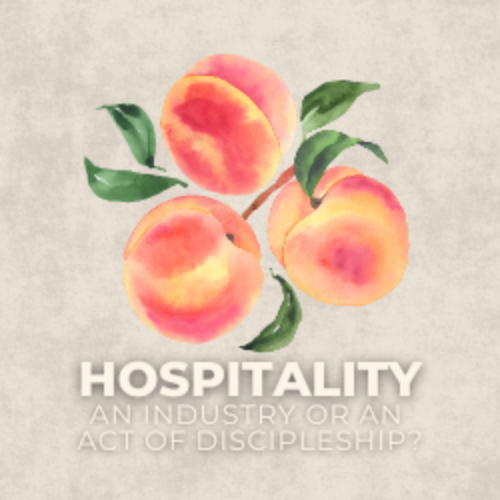
      Hospitality: An Industry or an Act of Discipleship?

      “Let mutual affection continue.  Do not neglect to show hospitality to strangers, for by doing that some have entertained angels without knowing it.” – Hebrews 13:1-2 (NRSVUE)

      Firm, yet slightly soft to the touch.  Golden yellow with a deep red blush kissing its shoulder.  Sweet, fruity, tangy, with a subtle floral aroma capturing the quintessential smell and taste of summer.  It truly was a sensory delight, boasting bright colors, an alluring aroma, and a flavor that caused my mind to do cartwheels, since the days of doing physical cartwheels are behind me!  

      Two weeks ago, I had the opportunity to enjoy my first summer peach while Travis and I were visiting his family in South Carolina, which for the record produces the most peaches of any state in the South — including Georgia, who endearingly likes to call itself “The Peach State.”   Bless their hearts!

      Given that folks in South Carolina know a thing or two about peaches, I was fortunate to be able to have that wonderful experience to kickoff the fantastic summer produce season — peaches, for sure, but also blueberries, cherries, plums, corn, tomatoes, fresh herbs, and more — in such a delightful and delectable way.

      In fact, it was in this experience of eating that peach (and subsequent ones) that I was given the opportunity to marvel, once again, at the magnificence of God’s hospitality. 

      Yes, the peach did provide nourishment, which is one aspect of providing hospitality.  However, the sheer variety of colors, textures, flavors, and scents of peaches — as well as other fruits, vegetables, legumes, and grains — demonstrate subtly, but profoundly, God’s unconditional love, kindness, and generosity for and towards us.

      It is pretty common these days to think of “hospitality” as providing food to friends and family, or perhaps in terms of the multi-trillion-dollar global industry that includes hotels, restaurants, and often food-related tourist activities.

      However, in past centuries, and really up until the 18th century, hospitality included not only sharing food with family and friends, BUT ALSO with strangers.  And in addition to providing food, hospitality used to also include offering shelter and protection.  

      Extending hospitality was not only a common practice across cultures but also was fundamental to Christian discipleship. The Bible repeatedly demonstrates the richer, broader, expanded vision for what hospitality is and should be. 

       The supreme example is Jesus’ parable of the Good Samaritan.

      During the third week of our summer series (the week of July 13th), we will explore the role of hospitality by looking at it through the lens of “what we eat.”  We hope you will join us then, and in the meantime, we hope you will pause to consider the following reflection questions:

      • What aspects of providing hospitality do you enjoy?
      • What makes hospitality challenging (both offering and receiving it)?
      • Where do you see your community of faith offering hospitality the way Jesus intended?  In what ways could they fulfill that ministry more fully?


      May All Be Well,

      Karen H. Webster

      HSHC Co-Founder/Executive Director

      1“By the eighteenth century, hospitality was viewed by many as an antiquated practice, out of step with busy commercial society, a relic from an earlier time.”  Christine D Pohl. Making Room: Recovering Hospitality as a Christian Tradition. Eerdmans Publishing Company, Grand Rapids, Michigan. 2024, p. 25.


      • 1
      • 2
      • 3
      • …
      • 11
      Sidebar
      Recent Posts
      • April 2026 Recipes
      • April 2026 Trail Notes
      • January 2026 Trail Notes
      • January 2026 Recipes
      • November 2025 Recipes
      Recent Comments
        Archives
        • April 2026
        • January 2026
        • November 2025
        • September 2025
        • June 2025
        • April 2025
        • January 2025
        • November 2024
        • September 2024
        • June 2024
        • April 2024
        • January 2024
        • November 2023
        • September 2023
        • June 2023
        • April 2023
        • January 2023
        • October 2022
        • September 2022
        • August 2022
        • June 2022
        • May 2022
        • April 2022
        • March 2022
        • January 2022
        • December 2021
        • November 2021
        • September 2021
        • June 2021
        • April 2021
        • February 2021
        • January 2021
        • November 2020
        • September 2020
        • August 2020
        • June 2020
        • April 2020
        • January 2020
        Categories
        • Intern Field Notes
        • News
        • Recipes
        • Research
        • Small Group
        • Trail Notes
        • Uncategorized
        Meta
        • Log in
        • Entries feed
        • Comments feed
        • WordPress.org
        Categories
        • Intern Field Notes
        • News
        • Recipes
        • Research
        • Small Group
        • Trail Notes
        • Uncategorized
        Tags
        air authenticity balance church dessert dinner Enough environment expectations faith fall garden health healthy holiday hydration lent listen making sense ministry movement plant popularity potato burger productivity recipe research rest salad seminarians sensing shalom shalom soil stopping stress summer sustainable time trailnotes trail notes vegan vegetable water wellness wholeness
        Donate Now
        Sign Up for Our Newsletter
        Silver Seal of Transparency

        Click for Financial Information

        Explore HSHC

        About Us
        Seminarians
        HSHC@CTS
        Congregations
        Research & Advocacy
        Contact Us
        Donate
        Privacy

        Copyright ©2020 Health Seminarians-Healthy Church. All rights reserved.